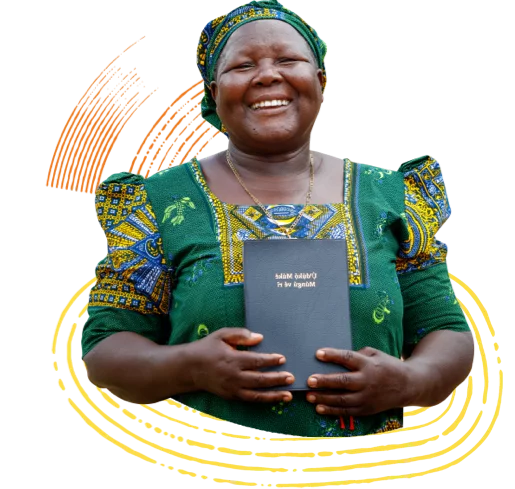
‘So it is very important for our people to have all of the Bible translated into Ifè.’
Translation of the Ifè Bible is due to be completed in the next few years.
‘For the Ifè people, having the whole Bible will have a profound impact,’ continues James. ‘The availability of the whole Bible creates new opportunities for churches and Christians to engage with God’s word more fully as it is unlocked for every heart. As people encounter the Scriptures more deeply, they are better able to understand God’s character, Christ’s work, and the hope of the gospel. Over time, that shapes lives, strengthens churches and bears fruit in communities – creating new pathways to hope.’
1 in 5 still waiting
Despite the progress represented by the 800th Bible, however, there is still much work to be done. Although the 800th Bible is a major milestone, and means that four-fifths of the world population have the Bible in their language, the fact remains that 1 in 5 people still do not have the Bible in their language. That’s about 1.5 billion people and just under 6,600 languages without the Bible! (There are 7,393 languages in total.)
But the good news is that there is more translation work happening then ever before, and so the huge leap forward represented by the 800th Bible is set to continue in the coming years.
James concludes: ‘As we join in the celebrations for the 800th Bible, at the same time we remember the 1 in 5 people worldwide who do not yet have access to the Bible in the language that serves them best. So alongside our gratitude for what has been achieved, there remains a sense of urgency. Every language represents people whom God loves. That is why we continue to work with Christians and churches around the world as they seek to make God’s word accessible to their communities.’